Choosing the right Google Business Profile category is one of the most important steps for accounting firms that want to rank in local search results. This guide explains which categories work best for accountants, CPA firms, bookkeepers, and tax advisors. It also covers how to combine categories with services, keywords, and other local SEO efforts to build a stronger online presence.
Key Takeaways
#1 Local SEO Ranking Signal: Category selection directly dictates which local search queries trigger your listing on Google Maps.
Primary Category Focus: Use "Certified Public Accountant" or "Accountant" as your primary classification for maximum local search weight.
Strategic Secondary Categories: Expand visibility using specific categories like "Tax Preparation Service", "Bookkeeping Service", or "Financial Consultant".
AI Search Engine Relevance: Correct categories ensure your firm gets cited accurately in ChatGPT, Perplexity, and Google Gemini recommendations.
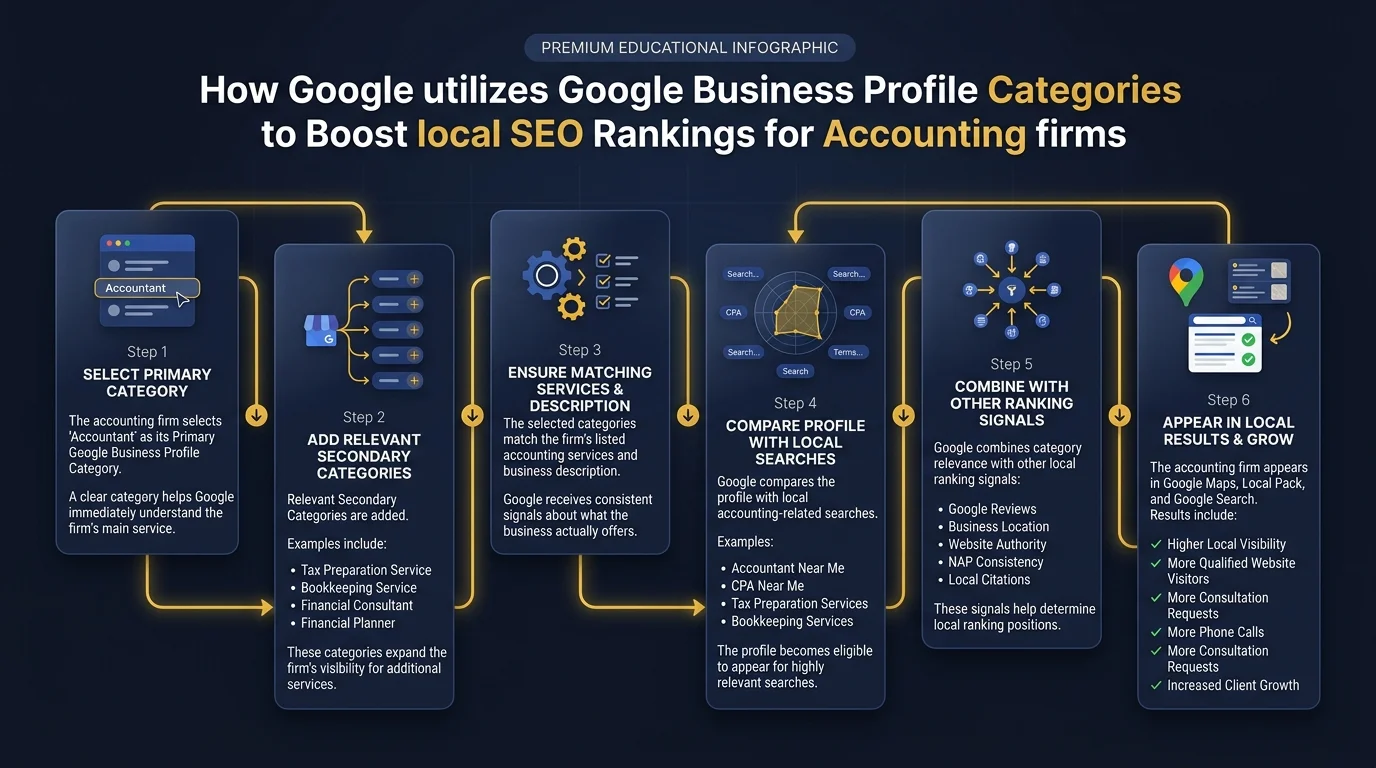
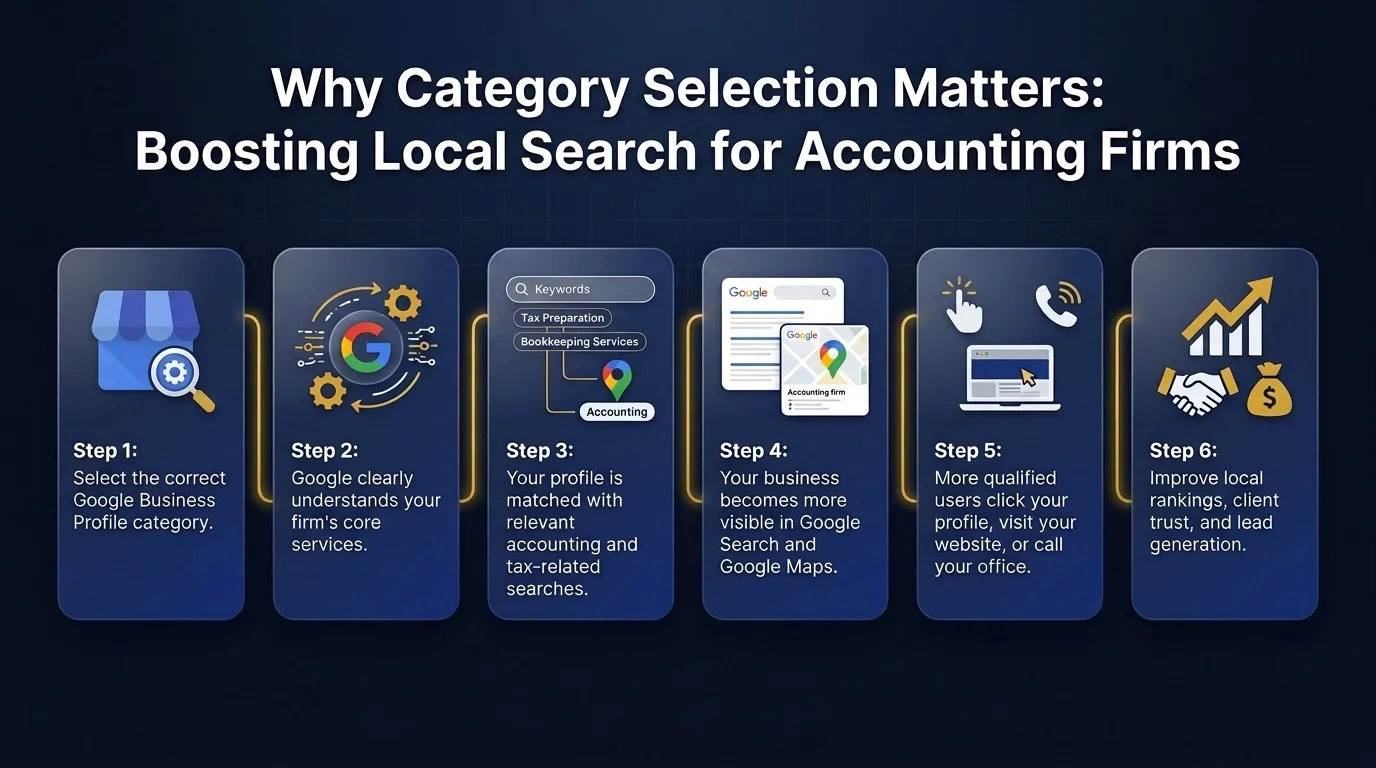
Search engine optimization for accountants starts with small details that often get overlooked. One of these details is the business category chosen inside Google Business Profile. This single setting tells Google what your firm does and which searches your profile should appear in within the Google Map Pack.
If you choose the wrong category, your firm might miss out on valuable local searches or face problems like an accounting firm not showing on Google Maps. For example, a CPA firm that only selects a general category like Business Service may lose visibility compared to a firm that selects Accountant or Tax Preparation Service directly.
Category selection works closely with other local SEO efforts, including accounting keyword research, service page targeting, and Google search ranking factors. Getting this step right gives your profile a stronger foundation before you even add reviews or photos. Check our comprehensive main Google Business Profile guide for accountants for broader context.
The Primary Category Every Accounting Firm Should Use
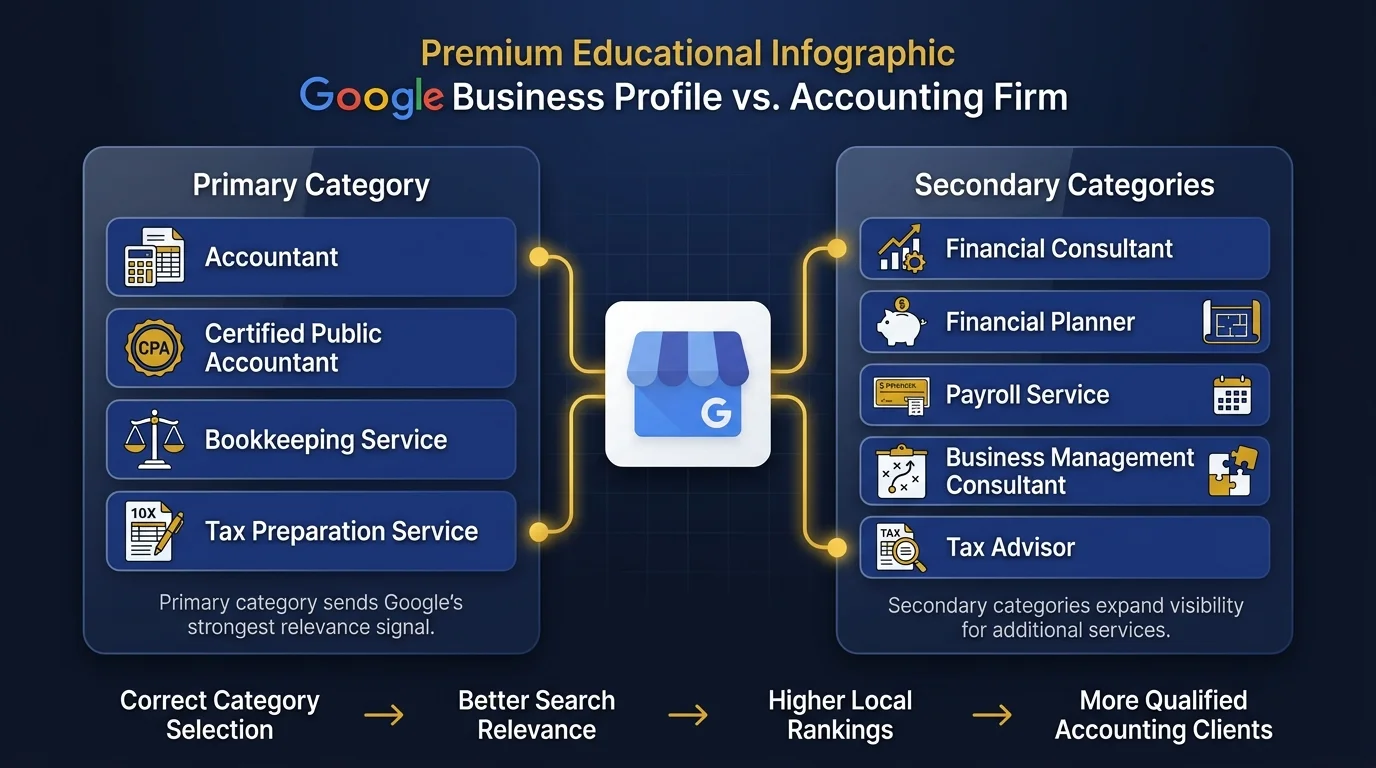
For most firms, the main category should simply be Accountant or Certified Public Accountant. This broad category matches a wide range of searches, including general queries like accountant near me or accounting firm SEO services.
Choosing the correct primary category supports your accounting firm marketing strategy because it directly influences which searches trigger your listing. Google relies heavily on this setting, even more than the words used in your business description. If you are starting fresh, consult our guide on GBP setup for new accounting practices.
Secondary Categories Worth Adding
Once your primary category is set, you can add several secondary categories to capture more specific searches. Review our step-by-step GBP setup guide for execution details. These secondary options might include:
Tax Preparation Service: Target clients searching for individual tax returns and business tax filings.
Bookkeeping Service: Capture small business owners looking for ongoing ledger and payroll maintenance.
Financial Consultant: Attract business owners seeking strategic financial forecasting and fractional management.
Adding secondary categories supports a niching strategy for accounting firms. If your firm specializes in certain services, such as payroll management or small business bookkeeping, these categories help match your listing with more specific searcher intent.
Categories for Specialized Accounting Services
Not every accounting firm offers the same services, so category choices should reflect your actual business. Explore our specialized accounting service page SEO guide for landing pages covering:
Selecting categories with accuracy avoids confusing both Google algorithms and potential clients.
Avoiding Common Category Mistakes
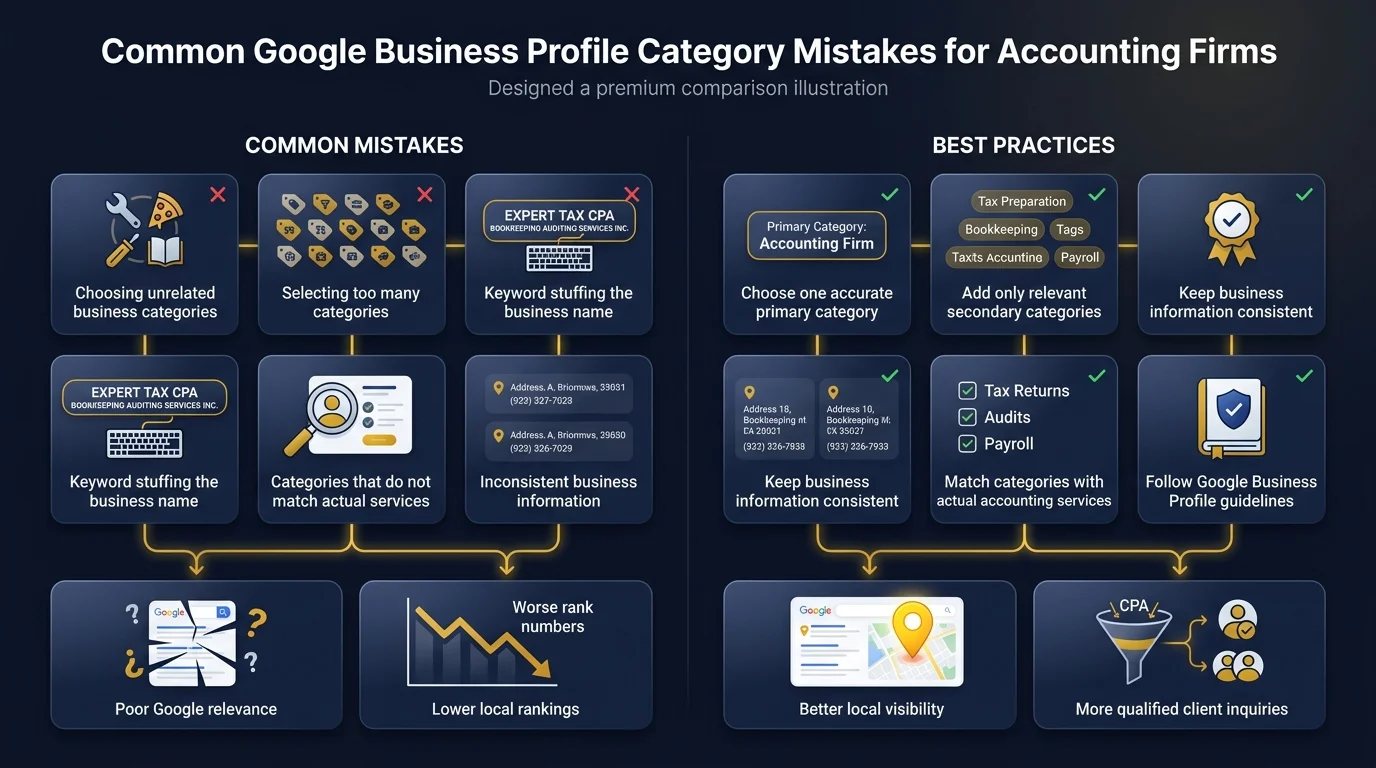
One common mistake is selecting too many unrelated categories just to appear in more searches. This approach often backfires, since Google may see the profile as less relevant for any single search term. Follow our accounting local SEO checklist to ensure your setup is clean.
Another mistake is choosing a category that does not match your actual services. It is also important to avoid keyword stuffing inside category names or business names. Learn how to maintain accuracy across NAP consistency and how to fix inconsistent citations.
How Categories Connect to Local SEO
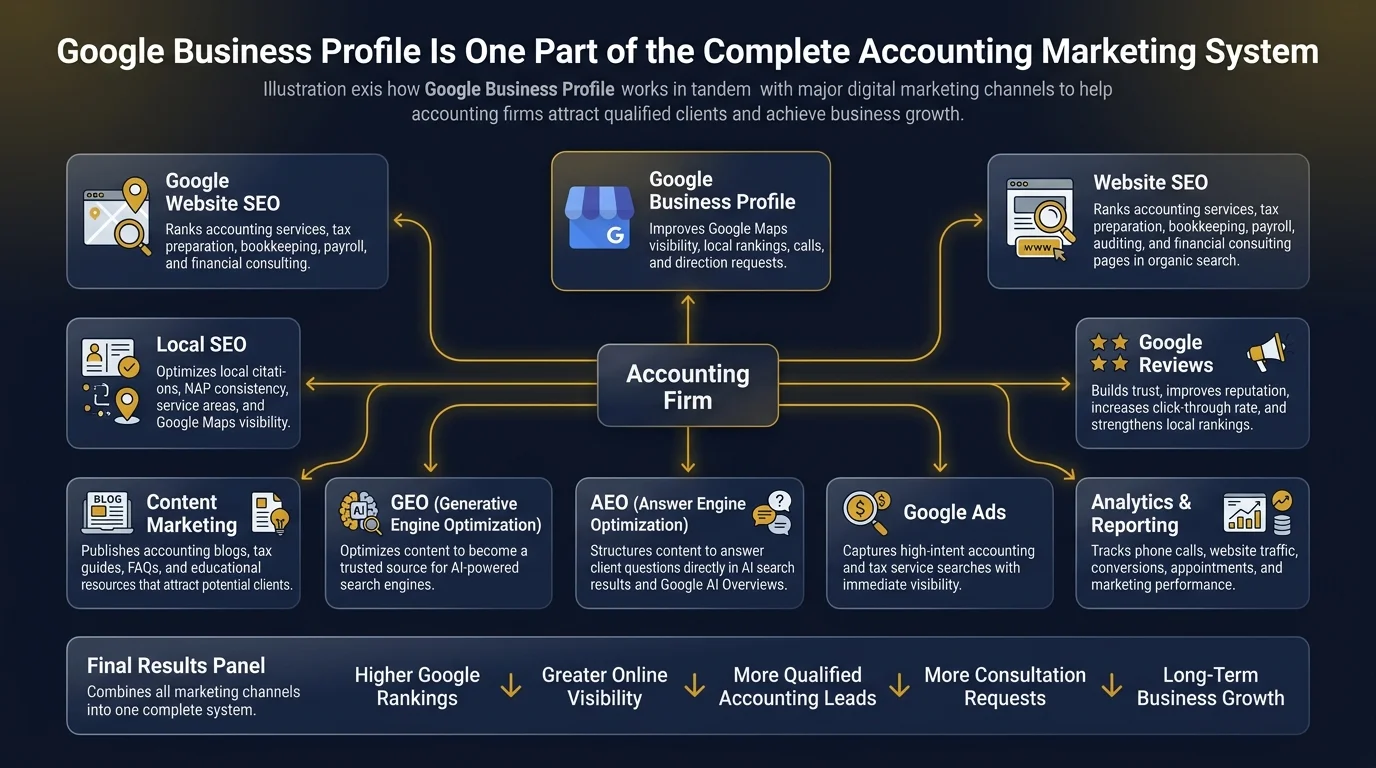
Local SEO for accountants depends on more than just categories, but categories remain one of the strongest ranking factors. When paired with accurate service area settings, a complete business description, and consistent contact information, the right categories help your firm appear in more relevant local searches.
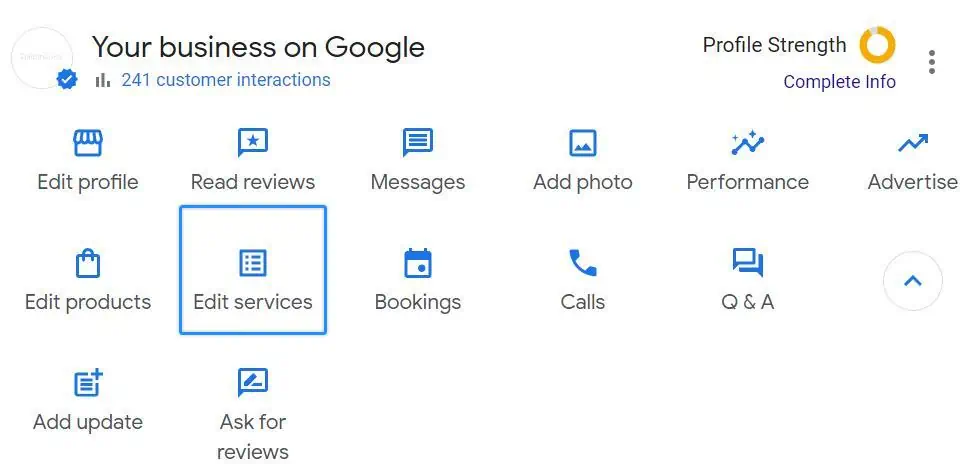
Beyond the main category settings, Google Business Profile allows firms to list individual services. Detailed service listings work alongside your chosen categories to strengthen your overall keyword optimization strategy.
As your accounting firm grows, your services may change. It is a good practice to review your categories every few months and update them as needed. Update categories during high-volume periods like tax season.
Choosing the right categories is just one part of a complete digital marketing strategy. Compare long-term organic growth versus paid channels in our analysis of SEO vs Google Ads for accountants.
Tools That Help With Category and Keyword Decisions
Several tools can help firms decide which categories and keywords matter most. Explore our roundup of the best accounting SEO tools to analyze search volume for terms related to your services.
Selecting the right Google Business Profile categories gives accounting firms a strong advantage in local search. Whether your firm focuses on tax preparation, bookkeeping, financial planning, or a mix of services, accurate categories help Google match your listing with the right clients.
Let our accounting search architects audit your Google Business Profile categories, Map Pack rankings, and competitor positioning for high-value client acquisition.
For most practices, the single best primary category is 'Certified Public Accountant' (for licensed CPA practices) or 'Accountant' (for general accounting firms). Setting this as your primary category gives Google the clearest ranking signal for local map searches.
You should select 2 to 5 relevant secondary categories that accurately match your actual service offerings, such as 'Tax Preparation Service', 'Bookkeeping Service', 'Payroll Service', or 'Financial Consultant'. Avoid adding irrelevant categories, as this dilutes your profile's focus.
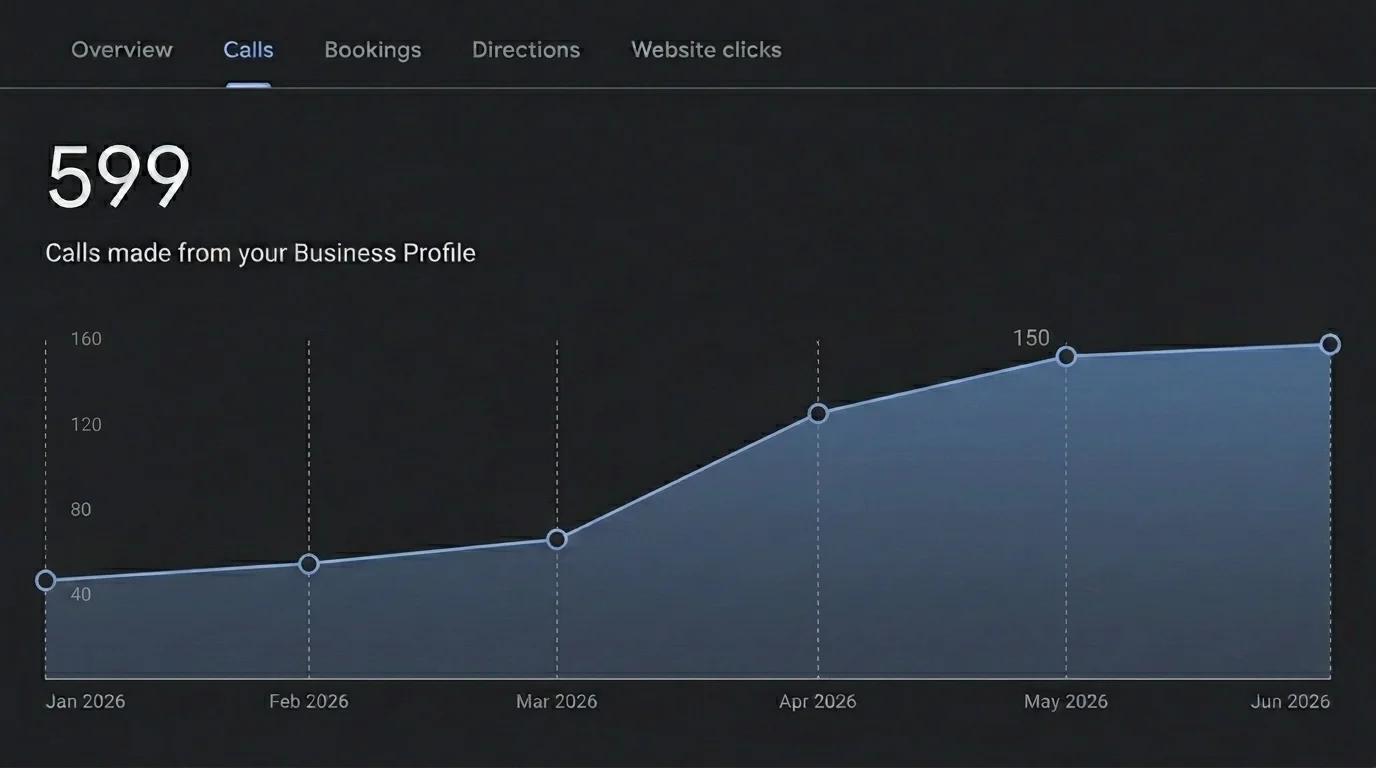
If you change your primary category to an inaccurate option or add spammy, unrelated secondary categories, your rankings can drop. However, refining your categories to reflect your core services accurately usually results in increased search visibility within a few weeks.
If tax preparation and tax planning form the bulk of your practice, set 'Tax Preparation Service' or 'Tax Consultant' as a primary or strong secondary category alongside 'Accountant'.
Yes. Generative Engine Optimization (GEO) and Answer Engine Optimization (AEO) rely heavily on category entities and structured data. AI engines read your GBP categories to determine your firm's core expertise when generating local recommendation lists.
We recommend reviewing your categories twice per year or whenever you expand into new practice areas like CFO advisory, forensic accounting, or niche industry tax services.
Get Started
Get Your Free Category & GBP Audit
Discover missing GBP categories, analyze your map rankings, and get a tailored strategy for your accounting practice.